


Content Management System.
Joomla! is a Content Management System, also called a CMS for short.
A CMS is a system for managing website content, sometimes also referred to as a dynamic website.
Reason: to distinguish it from a traditional static website.
A traditional website is comprised of one part (a set of files) store in the document root of the server hosting the website.
On the other hand, a CMS is comprised of two parts:
- directories and files stored in the document root, and
- a database stored on a separate server.
Document Root
The 'document root' is the main directory on a web server where the directories and files for a website are stored and accessed.
The 'document root' contains the publicly accessible content of a website.
Directory contents comprise:
- logic files which control the way your website works, and
- media files (for example, the images displayed in your website).
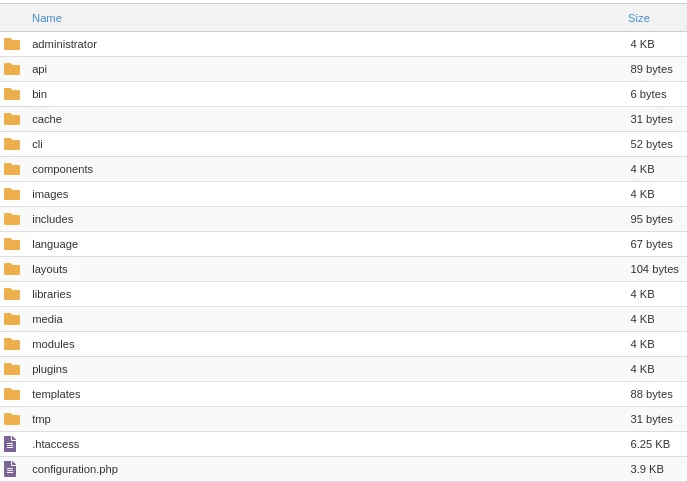
The image below illustrates the document root in the File Manager screen of a cPanel Hosting Control Panel.
Some elements of website content can be conveniently administered via the File Manager.
Example: media files stored in the 'images' directory.
Database
The Database Server is where your website's database tables are stored.
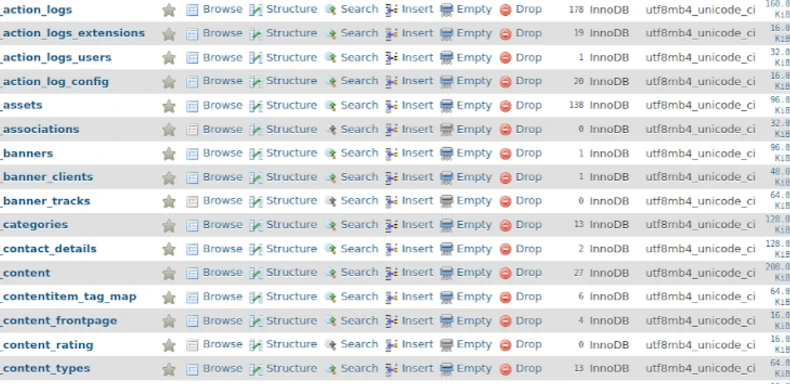
The image below illustrates what a Database looks like when viewed via the PhpMyAdmin screen of a Hosting Control Panel.
Experienced Joomla! CMS website administrators may find the following Database Tables are the ones they most often browse:
- categories,
- content,
- modules,
- users.
Experienced administrators can make global changes to website content by editing the above database tables.
How it all works
In a traditional static website, when visitors select a link they are taken from the page they are currently viewing to another one.
Traditional static websites may comprise hundreds if not thousands of separate HTML files, each one a separate web page.
Dynamic websites on the other hand consist of one page which loads in the visitor's browser when they visit the website.
When the visitor selects a link, a request is sent for text, images and other media to be brought to the screen.
It is the content of the page being viewed which changes and not the page itself.


